


Science and society
« Frontière » : When Geographers Showcase Their Research Areas
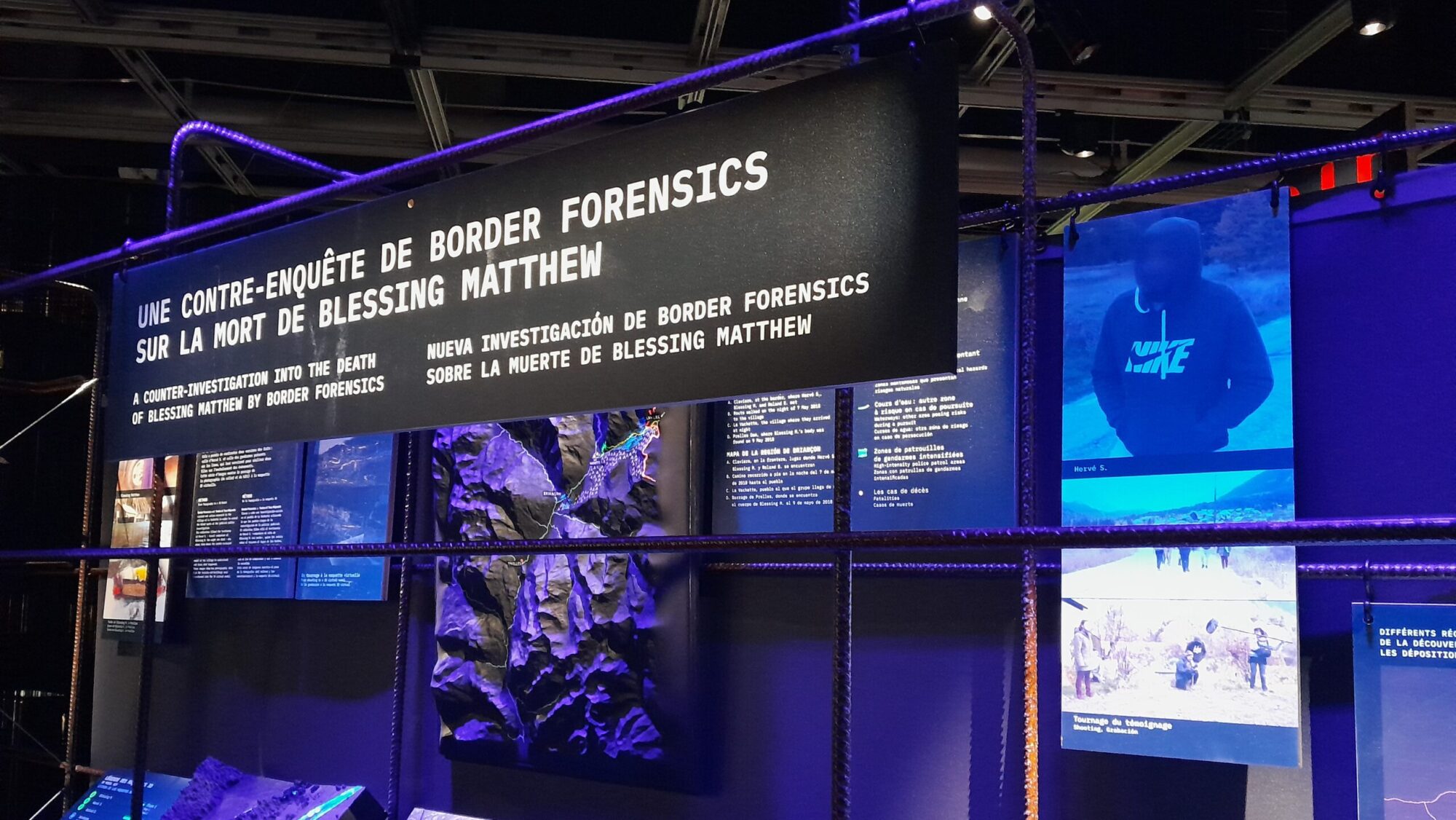 © Cristina Del Biaggio
The Cité des Sciences et de l’Industrie in La Villette, Paris, is hosting the exhibition *Frontière* through January 2, 2028. Based on the work of geographers, including Anne-Laure Amilhat Szary and Cristina Del Biaggio of the Pacte laboratory, it showcases various border regions around the world. A section dedicated to Europe highlights two very different facets of the continent.
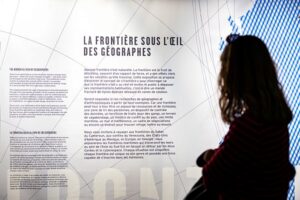
Even when drawn as an imaginary line separating the two sides of a mountain or running through the middle of the sea, borders are anything but abstract. Constructed through political negotiations or resulting from power dynamics, they are never natural, as their boundaries stem from deliberate choices. They impact our societies and embody lived histories.
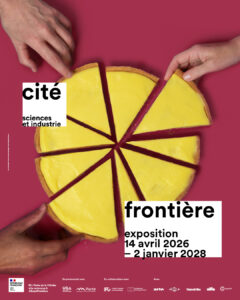 Designed in partnership with the Pacte Social Sciences Laboratory andthe University of Grenoble Alpes, the exhibition sheds light on geographers’ research and fieldwork on the issue of borders, offering a critical perspective. It is organized into a dozen thematic sections on different border regions around the world, including one that presents the two faces of Europe.
On the positive side, Europe embodies cross-border cooperation—promoted notably through the construction of the European Union—the exchange of resources, the sharing of wealth and cultures, and the creation of a zone of peace… And then there is the other side, which tells a darker story, such as the sorting of people and a Europe that kills at its gates those it considers undesirable. This dark side is symbolized by a list inscribed on a memorial stone of the 66,519 people who died while attempting to reach Europe between 1993 and 2026, as documented by the association United for Intercultural Action.
Among these people is Blessing Matthew, a young Nigerian woman who died in the Briançonnais border region, whose lifeless body was found in the Durance River on May 9, 2018. Her story was the subject of research by Cristina Del Biaggio and Sarah Bachellerie, notably through a counter-investigation that reconstructs the circumstances of her death. The research was conducted by the Border Forensics association in collaboration with the Toutes et Tous Migrants association, and documented in a video in which an eyewitness, a fellow traveler of Blessing Matthew, recounts the sequence of events that led to the young woman’s death. The exhibition brings this story to life through maps and images from the film, as well as objects that evoke the young woman’s journey and those that were (or were not) taken into account in the official investigation. The citizen-led counter-investigation revealed the truth about what happened at La Vachette, unlike the official investigation, which was dismissed.
More information about the exhibition is available on the Cité des sciences et de l’industrie website; it runs through January 2, 2028.
Listen to the podcast of Cristina Del Biaggio’s talk, “Blessing Matthew’s Cry: An Investigation into Border Deaths,” from the Avenue Centrale lecture series presented by the Maison des sciences humaines – Alpes.
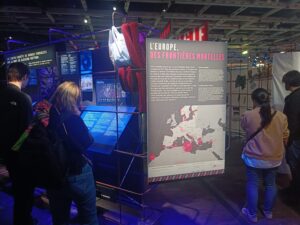
© Photos: Universciences /F. Jellaoui; Philippe Rekacewicz


