Labex life
Labex ITTEM 2025 meetings draw to a close
 © Leïla Shahshahani
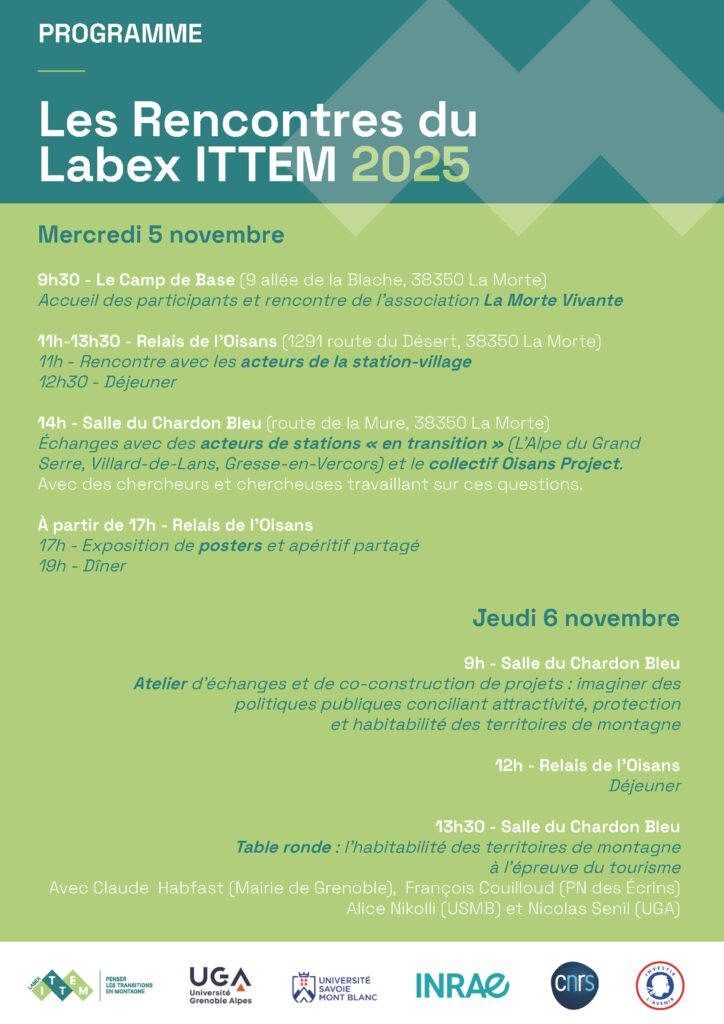
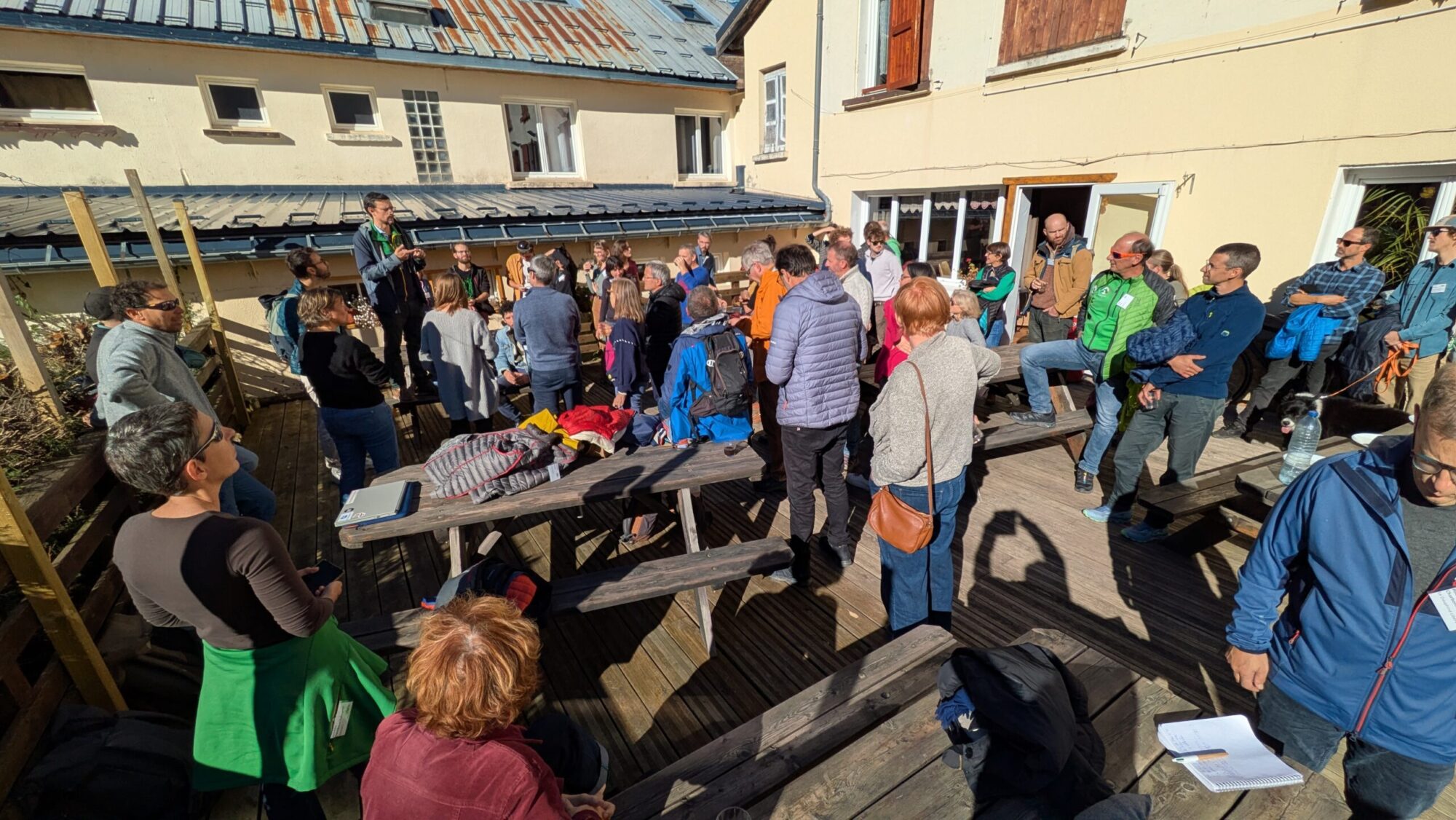
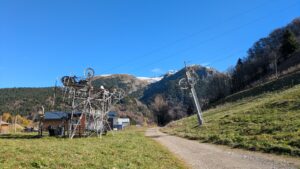
Held this year in the village resort of L’Alpe du Grand Serre, in the commune of La Morte (Isère), this 5th edition of Labex ITTEM’s Rencontres, organized with the citizen’s collective La Morte Vivante, focused on the current situation of ski resorts caught up in the effects of climate change.
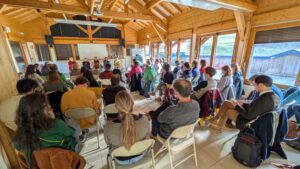
Two days to compare and contrast the work of scientists working on mountain issues in the human and social sciences with the problems encountered by local stakeholders and the activities of numerous partners: associations, local authorities, elected representatives, public establishments, local government representatives, etc.
The Rencontres were structured around a number of key events, punctuated by informal moments to leave room for more spontaneous and often equally fruitful exchanges.
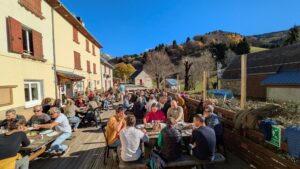
- César Ghaouti, president of the La Morte Vivante association, explained the history and challenges of the L’Alpe du Grand Serre resort, and the association’s projects, in the café Le Camp de Base;
- Discussions with elected officials and local residents faced with the risk of the resort’s closure and its direct consequences, with questions raised about the future of the village; a visit to a goat farm and a small museum on the initiative of a local resident.
- Cross-discussions between researchers and players from other ski resorts “in transition”, with the former mayor of Gresse-en-Vercors and representatives of the associations Vercors Citoyens and Oisans Project.
- Workshop to discuss the public policies needed to move from ideas and projects to concrete action.
- Round-table discussion with researchers, elected representatives and wilderness reserve curators on the habitability of mountain territories in the face of tourism, with a look at summer mountain news and a questioning of the notion of (over)frequentation.
Among the many issues discussed over the course of these days, often based on the case of La Morte, we will mention, in no particular order and without claiming to be exhaustive:
🎿 Will maintaining the ski resort and its lifts for another year (or more) facilitate a transitional trajectory for the commune, or will it, on the contrary, be an obstacle to considering a bifurcation?
🚡 Would the installation of a teleported ski lift, leading to the top of the resort and desired by local residents, be relevant in terms of tourism diversification, or would it constitute a costly and unnecessary development?
💶 How can an economy be generated beyond the windfall offered by downhill skiing, and where can funding be found to develop other alternative projects?
🏔️ How can we define the commune’s identity, the territory to which it belongs, and the “mountain” image and culture of the Matheysine, which is less prominent than in the neighboring massifs of Belledonne, Chartreuse and Vercors?
➕ Should the commune’s distinctive features be identified as “plus-values” to be promoted in order to develop tourism there, beyond a climatic refuge offer during hot spells?
🏘️ How can we solve the problem of housing accessibility and the predominance of second homes?
❓How can we think of the region as more than just a tourist destination, responding to the needs of local life? How can we harness the potential of social innovations to fuel a policy of diversification?
This year, almost 70 people took part in the Labex ITTEM Meetings, which have become an eagerly-awaited event for researchers and local partners, who are convinced that tomorrow’s mountains need to be imagined through cross-fertilization.




See Mountain Change Makers ‘ on-the-spot report: